

Texas’ Maternal Mortality Task Force Won’t Review Deaths From First Two Years After Dobbs
"Republicans’ push to stop collecting information and investigating maternal deaths is grossly negligent and will worsen this country’s maternal health care crisis."
Photo: Getty Images AbortionPolitics Abortion
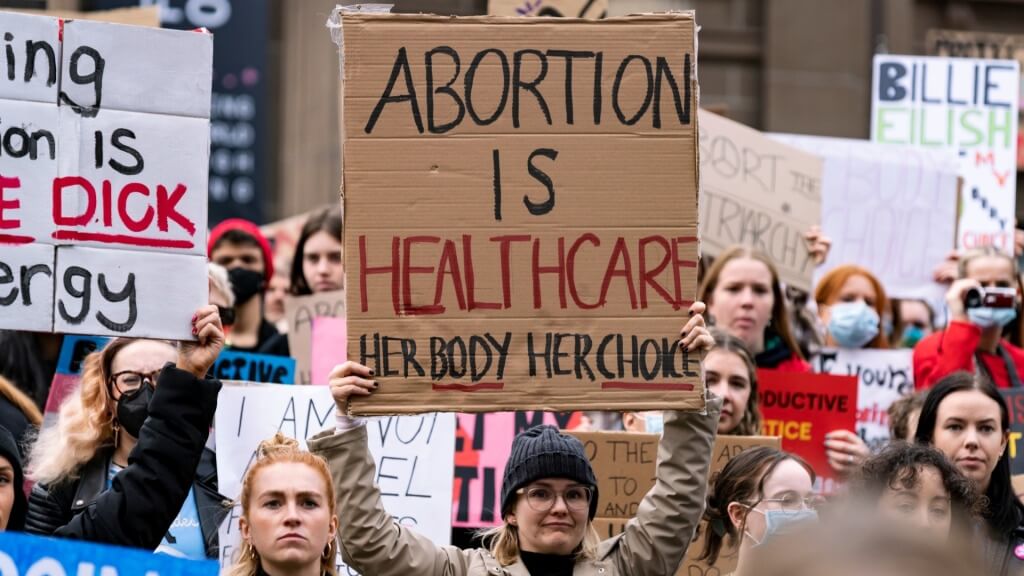
Under a regime of medical fascism, numbers tend to speak loudest—and one not need look far to see the data that suggests abortion bans are deadly for mothers and infants, detrimental for health care, and hazardous for victims of domestic violence. So—coincidence? Texas, one of the most anti-abortion states in the country, is opting to not know anything about its own maternal mortality figures from the immediate years after Roe was overturned.
In 2024, we reported how the state’s MMRC (Maternal Mortality and Morbidity Review Committee)—which was established by Texas in 2013 to count cases of deaths during pregnancy or childbirth—didn’t collect any abortion data for a full decade. Months later, it was also revealed that the MMRC decided to skip tracking rates through the two years after Roe. And now, with the next report coming out in less than two weeks—on Monday the Texas Observer resurfaced that it’d ignore all cases in the two years after Dobbs to only focus on 2024 onwards.
Texas Republicans don’t want the truth about what their abortion bans did to women. So the state committee that reviews maternal deaths is skipping 2022 & 2023, the exact years the bans took hold. You can’t claim to care about life & refuse to count the dead.
www.texasobserver.org/maternal-mor…— McSpocky™ (@mcspocky.com) August 17, 2026 at 9:11 PM
If you’ve been following along, you’ll know why this is alarming. When Roe was overturned, Texas was one of 12 states with a trigger ban in place—thus immediately imposing a total ban on abortion. Since then, the state’s passed even more draconian anti-abortion laws, such as last year’s House Bill 7, which allows Texans to sue anyone who sends pills into the state—including providers that could be delivering effective, sometimes life-saving, care.
In 2023, nearly two dozen women filed a lawsuit against the state, saying the ambiguity of its abortion ban endangered their lives. (The state Supreme Court unanimously rejected the lawsuit a year later.) Last year, ProPublica also identified that since August 2022 (when the state’s current total abortion ban went into effect), the number of blood transfusions in the ER during a first-trimester miscarriage increased by 54%. And, from September to October 2024, and again in 2025, the outlet also reported on the deaths of six women—including that of Porsha Ngumezi, who died because she was denied a life-saving procedure under the state’s total abortion ban.
Speaking to the Observer, Ngumezi’s husband—who’s never overcome the pain of losing his wife—said he feels “embarrassed and ashamed” Texas is refusing to do anything to investigate similar deaths. “How are they going to meaningfully find a solution? They are not holding themselves accountable,” he said. “It triggers memories of how those in charge didn’t really care about my wife or her life.”
Speaking to the outlet, a former MMRC member—among others—suggested the decision was likely politically motivated by GOP lawmakers that know just how deadly their anti-abortion policies have been.
“Texans deserve transparency amid this crisis,” further explained Timmaraju. “Refusing to investigate all maternal deaths is a way for Texas Republicans to avoid taking accountability for the harm caused by the state’s extreme abortion ban. This disrespect to Texas families who have lost loved ones cannot go unanswered.”
 Keep scrolling for more great stories.