

Next-Gen mRNA Vaccines Are Revolutionizing Medicine. Will MAGA/MAHA Choose to Be Left Behind?
mRNA vaccines show promise to help treat everything from cancer, to autoimmune disease, to simply improving older flu vaccines.
Photo via Unsplash, Spencer Davis HealthSplinter vaccines
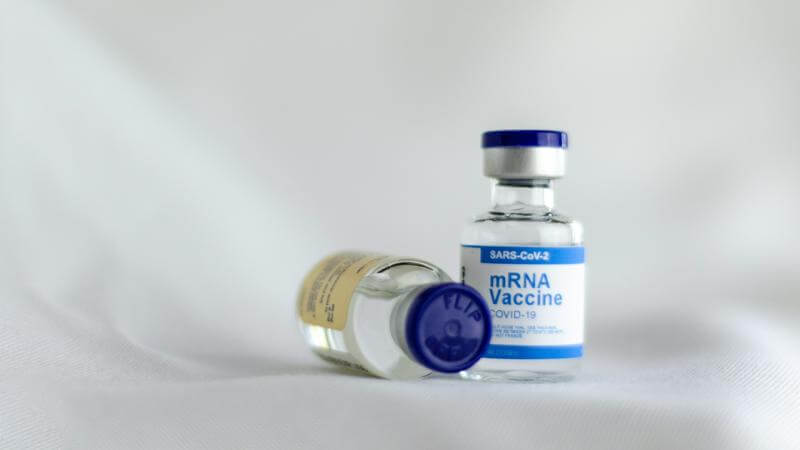
This week, news arrived of the latest potential breakthrough in medical science related to the development of mRNA vaccines: Pharmaceutical companies Moderna and Merck announced results from a late-stage trial of 1,137 people with high-risk melanoma (skin cancer) who had undergone surgery to have their cancer removed, and then received a novel, personalized cancer vaccine called intismeran (mRNA-4157) along with standard immunotherapy drugs like Keytruda. They found that those patients receiving the new mRNA vaccine were significantly less likely to have their cancer recur or spread further, in comparison with those who received only the immunotherapy drug.
This is, in short, the kind of revolutionary anti-cancer drug result that vaccine scientists and researchers have been seeking for decades, the kind of news that validates whole careers. It could herald the dawning of an entire new era of anti-cancer mRNA vaccines, not just for cancers like melanoma (the most deadly form of skin cancer, with roughly 112,000 new cases in the U.S. each year), but also cancers of other hard-to-treat areas like the lungs, bladder, kidney or pancreas. Clinical trials with mRNA vaccines are currently targeting all of those and more, hoping to fully unlock one of medicine’s most sought-after dreams: The ability to direct a human’s own immune system to attack and disassemble cancer and tumors, in a way tailored specifically to that person.
An experimental mRNA vaccine allowed people with high-risk melanoma to live longer, cancer-free, in a large, closely watched trial, the pharmaceutical companies Moderna and Merck announced Wednesday.
— The New York Times (@nytimes.com) 2:10 PM · Aug 19, 2026
“Folks like myself in the community have been waiting for this,” said Dr. Elias Sayour, a pediatric oncologist at the University of Florida, to the The New York Times. “We believed in this, we expected this, but I think there’s tremendous capacity for enhancing these approaches.”
Of course, as these new forms of messenger RNA vaccine technology become available–and this fall/winter will already see the rollout of the first generation of mRNA flu vaccines–the obvious question becomes how much our federal government and the vaccine conspiracists now embedded within our public health system will attempt to demonize them or hold them back. How deep does the anti-science rot go? What hurdles will these vaccines face as they seek Food and Drug Administration approval, and even once they obtain that approval, can our vaccine-averse Department of Health and Human Services actually be made to recommend them to public? How will insurance companies treat coverage, if previously influential bodies like the RFK Jr.-toppled Advisory Committee on Immunization Practices (ACIP) don’t recommend technologies that represent the future of medicine? How thoroughly has the MAHA American public been convinced to shun mRNA technology on a base level? And what would the political consequences–not to mention the public health cost–be for ignoring some of the biggest potential scientific breakthroughs in decades in a field like oncology?
In particular, what these new mRNA vaccines for diseases such as cancer offer is an alacrity and personalized aspect that just isn’t otherwise possible in developing vaccines. For the melanoma late-stage trial, for instance, intismeran was created by sequencing the individual tumors of each patient and finding what are referred as “neoantigens” within it, essentially a specific genetic makeup of that cancer. A personalized vaccine is then created with flexible mRNA technology with the neoantigens from their own body, which can help the body specifically target that tumor.
This process can take only six weeks, and this aspect is also what makes mRNA such a profoundly valuable tool for the new flu vaccine developed with it, because it will allow scientists to respond more quickly to the evolving and mutating nature of each year’s influenza virus strains, rather than trying to solely predict in advance which strains will become dominant that year. Or as Dr. Georges Benjamin, the chief executive officer of the American Public Health Association observed: “We’re going from a manufacturing process that takes about 6 months to one that takes about 6 weeks.” That makes the mRNA flu vaccine “a game changer in terms of what you can do.” It will give researchers far more leniency and agility to respond to a novel flu strain becoming dominant, which should in turn blunt the impact of annual outbreaks.
The news of the successful mRNA melanoma vaccine trial is incredible. I lost my beautiful best friend to melanoma on Christmas Eve 2011, when she was 29. That anyone would try to limit research on such life-saving technology infuriates me like nothing else.
— Jen , the MT liberal bird lady (@liberal-jen.bsky.social) 4:27 PM · Aug 19, 2026
That mRNA flu vaccine from Moderna, mRNA-1010 (mFLUSIVA), was just approved by the FDA last week for use in adults 50 and above, but it has already spurred questions on how much it will really be supported by Robert F. Kennedy Jr.’s Department of Health and Human Services. Some have questioned, indeed, whether any flu or COVID-19 vaccines would be available this coming fall and winter, thanks to the fact that the US Centers for Disease Control and Prevention’s (CDC) Advisory Committee on Immunization Practices (ACIP) hasn’t had a single meeting this year to weigh in on federal guidance for the distribution of these vaccines. That committee, whose members RFK Jr. first fired en masse upon taking office, only to fill it with yes-men and vaccine skeptics, has been in limbo ever since a federal judge called it (and RFK Jr.) out in March on their science-free approach and noted that almost none of its members had even a smidge of actual medical experience working with vaccines, and invalidated their moves to upend the childhood vaccination schedule. The two meetings it should have had by now in 2026 were both canceled “due to ongoing litigation,” according to its website. Other medical organizations have responded by advising their members to make the unprecedented step of ignoring ACIP guidance (or the lack thereof) and instead accept vaccine recommendations from independent organizations like the American Academy of Pediatrics.
RFKjr is proposing to change the ACIP charter to make it easier for people without vaccine expertise to be members (ie most of the people he originally picked), and more focus on potential vax harms not benefits and get advice from groups with anti-vax views
— Prof Sheena Cruickshank (@sheencr.bsky.social) 8:18 AM · Jun 27, 2026
Let’s not understate how significant that is, given that HHS spokespeople and the federal government’s lawyers have previously claimed that the ACIP’s decisions are completely “unreviewable,” with a DOJ attorney arguing at one point in court that even if HHS told a person they should deliberately become infected with measles, that decision would still be part of RFK Jr.’s “broad, unreviewable authority” to change vaccine policy however he sees fit.
The nonsensical, contradictory nature of the government’s approach toward vaccines of all kinds, and mRNA vaccines in particular, makes its next move almost impossible to gauge. When the FDA initially refused to review the mRNA flu vaccine from Moderna in February (citing clinical issues in trial design), for instance, Politico cited unnamed sources from within the executive branch who claimed Donald Trump had exerted influence over now-ousted FDA commissioner Marty Makary to get the agency to reconsider, something that the White House would deny. But at the same time, Trump is out there signing fanciful executive orders aimed at once again dismantling the childhood vaccine schedule or splitting one vaccine into multiple shots, while also nominating a new FDA Commissioner in Heidi Overton with a long history of broad anti-vaccine statements herself. It’s as if Trump’s view on the political calculus of vaccine availability (and sick Americans) changes not just with the day, but with the hour.
The scientific world, meanwhile, is hailing the results of a trial like the mRNA vaccine for melanoma as a groundbreaking moment in the history of cancer care. Will Americans be allowed to see the benefits? Or are we so chained to delusional, woo-woo ideology in the midst of the second Trump administration that we’ll just sit on our thumbs and continue watching as the rest of the world passes us by?
Merck and Moderna say their mRNA cancer vaccine worked in a late-stage melanoma trial. A roadkill eating nepo baby heroin addict says all it will do is give people autism. For busy melanoma patients, it can be hard to know who to trust.
— NY Times Pitchbot (@nytpitchbot.bsky.social) 5:29 PM · Aug 19, 2026
 Keep scrolling for more great stories.