

Dolly Parton—Voice of Reason, Compassion, and Women’s Empowerment—Dies at 80
"I still have so many things I want to achieve," Parton said on Friday, regarding her ongoing health issues.
Photo: Getty Images Dolly Parton
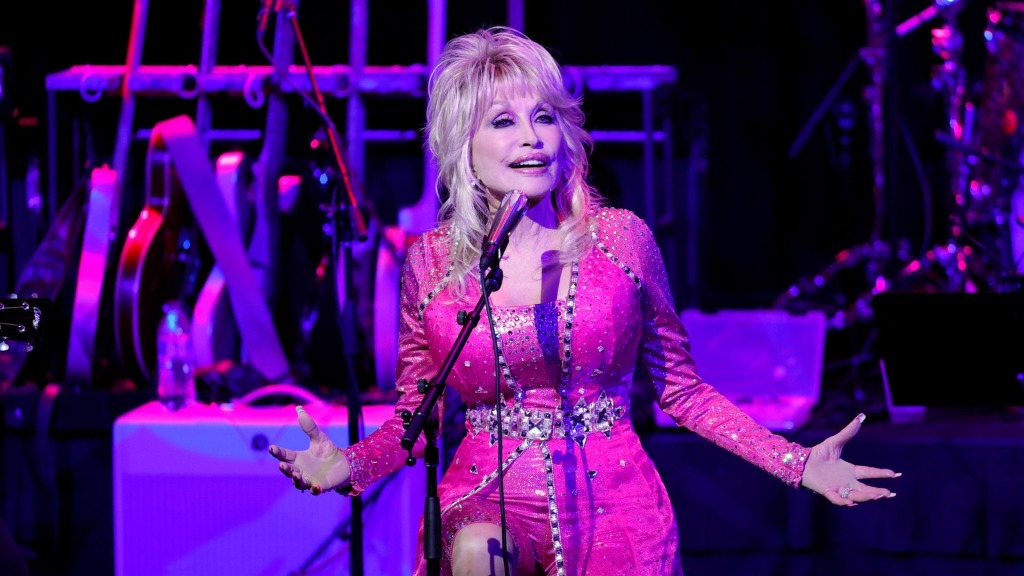
Dolly Parton, country music singing-songwriting legend, actress, entrepreneur, philanthropist, and woman who defies categorization, died in Nashville on Tuesday, August 25, at the age of 80.
Her nephew, Brian Seaver, shared the news in a video to Dolly’s social media accounts, a task he says his aunt had asked of him years ago, before he “fully absorbed it as a future reality.”
“It is an honor, an honor that is mixed with absolute pride and great sadness. But sadness lies with us, not with Dolly,” Seaver announced.
A message from the family of Dolly Parton. pic.twitter.com/9DNRgRx0uH
— Dolly Parton (@DollyParton) August 25, 2026
“Dolly has lived in the light and is in the arms of Jesus, surely met by Carl, her parents and countless others who have watched her and longed to meet her in the heavens.”
Parton made her debut in 1967 with the album Hello, I’m Dolly and went on to pen such iconic hits as “Jolene,” “Here You Come Again,” “Coat of Many Colors” and “I Will Always Love You,” the latter of which was later immortalized by the late Whitney Houston.
Parton made a life of wearing her womanhood on her bedazzled, fringed sleeves. In Hello, I’m Dolly, she introduced her “Dumb Blonde” persona and iconic ‘do, not a sign of foolishness or weakness, but rather a symbol of her strength. Her ballad (and future Jezebel anthem) “Just Because I’m a Woman,” from her sophomore album of the same name, confronts the double standards placed on women by hypocritical men. She brought her talents to the silver screen in 9 to 5 (1980) and Steel Magnolias (1989), and wrote the title song for 9 to 5, which likewise became an anthem for working women.
Throughout her life, Parton was also an outspoken advocate for the LGBTQ+ community, offering compassion at a time when doing so was considered taboo. In 2009, Parton voiced her support for marriage equality with her signature wit, joking, “Sure, why can’t they get married? They should suffer like the rest of us do.” In a 2017 interview with Larry King, she urged fellow Christians to show more love toward the LGBTQ+ community and refrain from harmful judgment. “We’re not God, we’re not judges, we’re supposed to love one another, we’re supposed to not judge,” she told King. Her legacy will also live on in the halls of drag clubs, where she has long been celebrated as an icon and advocate for drag as an art form. Parton famously said, “If I hadn’t been a woman, I’d be a drag queen for sure.”
While she first picked up a guitar at age six, singing in her grandfather’s church, Parton never put it down. Even after facing increasingly serious health challenges this year, she continued to share her voice after celebrating her 80th birthday in January. Just this past Friday, Parton shared an update regarding her condition to People magazine:
“As I’ve shared in video messages throughout the past year, I am dealing with some health issues that I just didn’t pay attention to when I was watching over Carl.” Her husband, Carl Parton, passed away in 2025 after nearly 60 years of marriage.
“I’m still healin’, I’m still workin’!” she told the outlet. “You know me—as I’ve often said—I’ve dreamed myself into a corner, and I still have so many things I want to achieve, so I’m gonna keep on working as long as I can to see everything come to life.”
After a career spanning seven decades and a lifetime defined by kindness and levity, Parton will leave behind a legacy as the best-selling female country music artist of all time, and an icon to all who found empowerment, comfort, and joy in her voice.
 Keep scrolling for more great stories.