

After 50 Years, Car Crash Testing for Women Gets an Update
Image credit: Adobe Stock Lifestyle
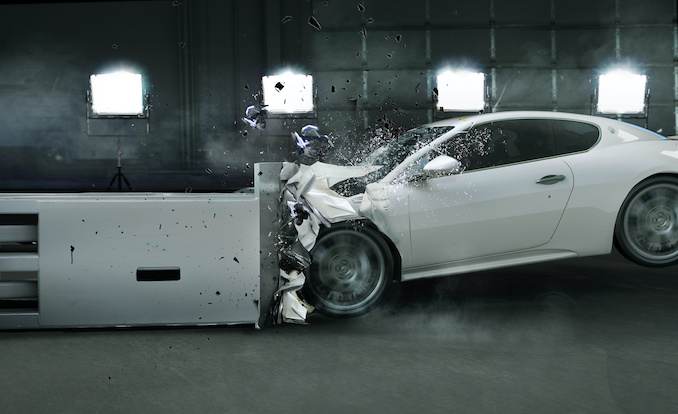
Women are statistically more likely than men to suffer a moderate to severe injury in a car crash, and the industry is just beginning to look at this issue.
One thing that most drivers probably don’t know is that vehicle safety design and testing have not affected men and women equally, a fact that can leave more women seeking out a personal injury attorney like Florida Anidjar & Levine or others after a car accident. And you don’t need to drive one of the nation’s deadliest or most accident-prone roads for this to be the case. The problem is more systemic.
Although modern vehicles are substantially safer than those driven by earlier generations, today’s car design, seating positions, and methods for evaluating safety systems all take men’s bodies into account more than women’s bodies. In fact, the National Highway Traffic Safety Administration’s research earlier this year on crash outcomes found that in comparable automobile accidents, women face a statistically higher risk of moderate to severe injury (by 46 percent) than men do.
The Problem of the Crash Test Dummy
One of the challenges with crash testing, even today, is that advanced crash dummies tend to mimic male anatomy and the average dimensions of a man’s body. The dimensions and biomechanics represented in the test can affect what researchers discover about how restraint systems and the vehicle’s structure protect its occupants. The good news is that this is starting to change; the bad news is that these changes do not affect most vehicles already on the road.
In November 2025, the National Highway Traffic Safety Administration (NHTSA) first proposed adding an advanced female-model crash-test dummy to its vehicle safety tests.
(More advanced models have been available for a few years, thanks to the work of Swedish engineers.) This new model, the THOR-05F, stands at about five feet tall and weighs 110 pounds, allowing for testing well outside the dimensions of crash-test dummies designed on the template of the average male height and weight. With more than 150 advanced sensors, the dummy is designed to capture more accurate crash injury data for the neck, ribs, pelvis, and lower legs. It’s a step forward, given that the agency previously used a 1970s-era design to represent female drivers and passengers.
If the THOR-05F is integrated into crash testing regulations, that likely won’t happen for another year or two. However, car companies seeking a competitive edge can begin using the new model voluntarily today. Questions remain, however; while the new testing model does collect more detailed injury data, there still aren’t any crash test dummies that represent the bodies of taller or larger women. These drivers and passengers are still represented in crash tests by male models designed based on male biomechanics.
Taking Safety into Your Own Hands
While systemic car crash testing takes small steps forward after a 50-year delay in updating female crash test dummies, there are steps any driver can take to reduce the risk of moderate or severe injury. Knowing that cars are not necessarily designed with your body and its safety in mind is the first step. Next, take caution with the positioning of your seat, headrest, and seat belt.
Maintaining a recommended distance from your steering wheel may feel inconvenient (especially if you are a driver with shorter reach), but it can be life-saving in a crash. Adjusting your headrest properly (and readjusting it for your height when driving a shared vehicle) is an easy step to overlook, but it can protect your neck and spine. Making sure the belt buckles are across your hips rather than your stomach, and that the shoulder strap crosses your chest as intended, can also make a difference in a collision.
Finally, when purchasing a vehicle, you can check its safety ratings and ask questions about its safety technology. Even though current safety testing does not equally measure impact on men and women, safety upgrades such as structural protections, more advanced airbags, and crash-avoidance tech do make some difference. Newer, higher-tech vehicles are much safer, and the NHTSA study noted that the fatality risk declined significantly when comparing newer with older vehicles.
It is going to take time for crash testing and safety design procedures to include more accurate data for a wider range of bodies, but that does not mean that in the meantime, you can’t take a few steps to keep you and your loved ones safe.
FAQ
Do vehicle crashes affect women and men differently?
Yes. Federal research has found that crash outcomes differ for men and women, with women at statistically higher risk of severe injury. Other factors affect crash outcomes, too, such as the car’s make and model, the year it was designed, and the safety technologies built into the vehicle.
How well represented are women in crash testing?
This is changing, but the NHTSA is only just beginning to replace a female-body crash-test dummy designed in the 1970s. If crash testing can be updated to account for different body sizes and builds, researchers could evaluate how vehicle structures and safety restraints affect a broader range of drivers and passengers.
Q: How can you, as the driver, position your seat safely?
A: Follow your manufacturer’s recommendation for appropriate distance between the driver and the steering wheel and airbag, while still keeping control of the floor pedals and wheel.
The Jezebel editorial staff was not involved in the creation of this content.
 Keep scrolling for more great stories.