

America’s Annual Tradition of Self-Inflicted Brain-Damage Is Upon Us
Football is the most American sport because of its inherent contradictions.
Photo by Michael Owens/Getty Images SplinterSports NFL
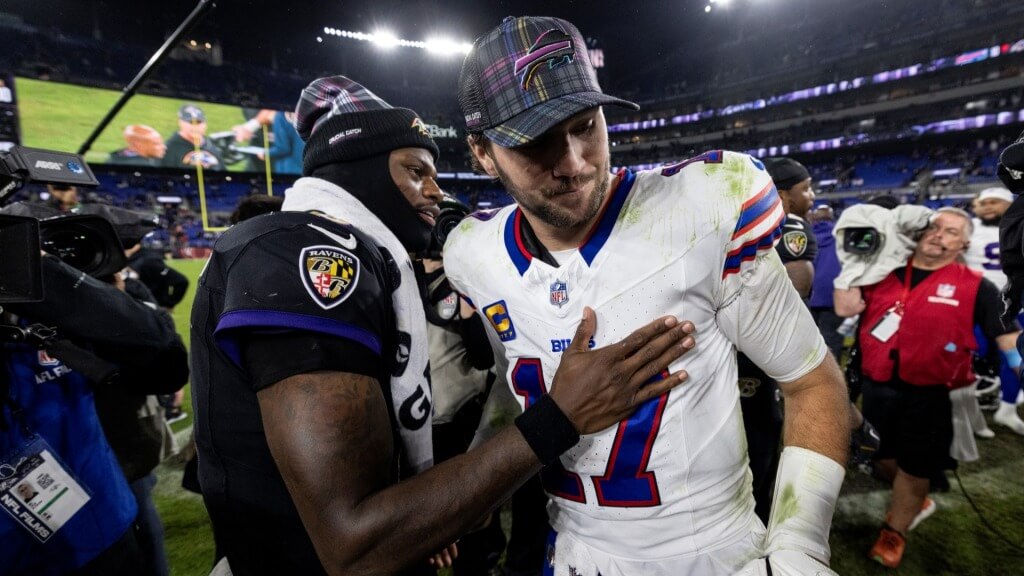
Our annual celebration of America’s inherent contradictions lies just around the corner, as the NFL and college football seasons will kick off in the coming weeks. Many folks like me are spending much of our free time right now learning as much as we can about this year’s iteration of our country’s premier random number generator, in hopes that we can dominate our fantasy leagues and satiate our various gambling habits. Like everything in America these days, people are trying to carve out small spaces of joy amidst the backdrop of impending doom, as another annual tradition has emerged alongside the start of the football season: new disturbing reporting on chronic traumatic encephalopathy (CTE) and what football does to its player’s brains.
Last August, KFF and ESPN surveyed people who played in the 1988 NFL season, and 96% reported having pain the last three months. “Half reported they experience pain every day, compared to 23% of men their age,” ESPN noted. “They also reported rates of cognitive decline three times higher than that of men their age, with 55% saying they had confusion or memory loss that’s happening more often or getting worse.” This year’s iteration of this grim American tradition comes from The BMJ, one of the world’s premier medical journals where researchers detailed their new attempt to measure the prevalence of CTE in NFL players.
“At least one in four of all the people who have played in the NFL might expect to end up with chronic traumatic encephalopathy, according to a study of hundreds of cases over a recent six-year period,” writes The Athletic about the study. What makes that figure especially grim is that it’s almost certainly the low end of the range. It’s possible and quite likely that the actual figure is higher. Perhaps much higher, as the study notes that “The possible prevalence [of CTE] at death during 2016 to 2021, when brain donation was most frequent, ranged between 24.5% and 97.7%.”
Football players have long talked about sacrifice because the game physically and tactically demands it, but there is a sacrifice that comes with watching this beautifully deranged sport too. Of your own dignity. Of your humanity. Of being able to profess that you live your values while spending your weekends watching a sport populated by a majority of young Black men with inadequate health care coverage getting into nonstop car accidents so billionaires and TV networks can broadcast it for billions of dollars. Every year I and many others wrestle with our love for a truly brilliant and unique game that only America could create. A game that has created countless joyous moments in my life alongside my friends and family, while knowing it was produced through a far greater sacrifice than anything I am capable of while sitting on my couch and drinking a beer.
And yet, that KFF/ESPN survey of 1988 NFL players found that even though half reported feeing depressed in the last 12 months (compared to a quarter of men their age), and 15% reported being diagnosed with dementia (compared to under 4% of men ages 65 and older), while six in 10 reported living with some type of disability (three times the rate of men their age) and like all subjects in America, Black players fared worse than white players across the board—nine out of 10 survey respondents said they would do it all over again.
A lot of non-football fans look at playing and watching the game as some kind of illogical contradiction, and they may be right, but players both in the past and today all profess to know what they are getting their bodies into. The online sportsball crowd whips up a lot of hysteria around the myriad wrongs of American sports and those of us who contradict our politics to engage with them, but the TV ratings are clear. Americans watch a ton of football games, and a few awards shows and political addresses together, then retreat into the algorithms of our various streaming services. This many people can’t be all wrong. We return to this poisoned well for some good reason.
I think it’s mainly because football and sports in general are perhaps America’s last true widely shared communal spaces. A lot of us don’t want to admit it, but sports are perhaps the load bearing pillar of many male friendships. Pop culture has splintered along with the internet, elevating so many niche communities in so many different subjects that the word mainstream almost feels relative now, leaving the Congressionally-approved monopoly of sports as the last remaining space where our age of loneliness can regularly commune at scale. Who performs at the Super Bowl Halftime Show is of immense cultural importance, as it is a time capsule of that year’s popular culture, which is why right-wing freaks get upset every year at Ted Nugent’s inexplicable exclusion from it. Like it or not, this exercise in collective brain damage is a vital aspect of American culture.
Which is why we keep coming back. Summer Sundays are quiet in my group chat, but come fall, weekends are not for the boys, they are for everyone to do some sports shitposting alongside thrilling games. Football clearly has some kind of power over the American psyche, but as I detailed last year, sports are ultimately about time with our friends and family.
Born in 1986, my earliest memory I can grasp is of a family gathering sitting in silence. I don’t remember anything else, just a kind of vague mental snapshot of a room where I knew all the people I love were sitting together. I told my mother this in my youth and she instantly identified it as the 1990 Super Bowl party where our beloved Denver Broncos suffered the worst drubbing in NFL history, losing 55-10 to the 49ers. According to her, the snapshot of silence imprinted on my brain was a nonstop cacophony of quiet sadness stretching across the entire gathering. The biggest game of the year bringing everyone together in hopes of joy, only to be overwhelmed by the ancient curse that is being a Broncos fan and knowing that unless an aging great quarterback on one final ride makes a deal with the devil, our team mainly exists to get blown out on the world stage and be a punchline for Homer Simpson. Deep in the depths of sports misery is where you find true joy, where an entire community comes together to support each other through its collective sports trauma.
don’t make me tap the sign
— shauna (@goldengateblond.bsky.social) January 17, 2026 at 6:36 PM
I was raised on legends of the Orange Crush and Randy Gradishar and all the pride those early Broncos teams brought to my little cow town. My mom was a diehard Broncos fan, and I spent the Sundays of my youth metaphorically living and dying with the team alongside her whether we were together or not. The tension we both felt as Elvis Grbac’s fateful 4th and 2 pass floated in the air, followed by the sheer elation of our embrace as Darien Gordon knocked the ball away to win the only playoff game the Broncos and the hated Kansas City Chiefs have ever played is a memory so powerful it feels like it happened just yesterday, and not 28 years ago (and also in my petty Chiefs hater dreams every night).
My mom passed away from cancer when I was 18, and I’ll never forget seeing Gradishar struggle going down the stairs at the local mall in his later days, but that has not stopped every Broncos game from feeling like a special time with my mom, no matter where we both are in the universe at that present time. This is just one of many family stories around sports passed down from generation to generation, and it helps explain the seeming illogic around the collective decision to dedicate so much energy to something so manifestly unhealthy and exploitative. The NFL is the last organization who treats football like family and the NCAA’s modern creator said it functions under a “plantation mentality,” but the NFL’s cynical tagline of “football is family” is true for all the non-corporate aspects of the sport. The players talk about a brotherhood that brings them back to a game they know is damaging their bodies. Football is a very powerful conduit for people to gather together with other people they care about.
I don’t know how much longer this can last atop American culture, and I am a firm believer in the inevitability of flag football taking over either this century or next. Every year I ask myself how I can rationalize my socialist politics with my deep love of a sport that destroys its player’s bodies, does not guarantee contracts, nor provides adequate long-term health care coverage for the players it harms, all so billionaires can make more money from their toys. Every year that question becomes more difficult to answer, yet still I eagerly look forward to watching my favorite sport with my mom and my friends and getting our hearts broken in a big game in some new, innovative way by this ancient curse (last year’s backup QB getting swallowed by a nor’easter in Denver at the New England 33-yard-line five minutes away from the Super Bowl was some pretty good work by the football gods). If you’re trying to find some sort of rational, linear logic in all of this, you’ll have about as much luck as applying that method to America writ large right now. And maybe that’s the point. Ultimately, all we have is each other amidst this age of breakdown that no one can escape from.
 Keep scrolling for more great stories.