

The Lindsay Clancy Case Was Irresistible for Conspiracy-Addicted America
It was utterly inevitable in our degraded society that the Lindsay Clancy case would eventually be dominated by online conspiracies.
Photo via Istockphoto, AnnaStills Splinter lindsay clancy
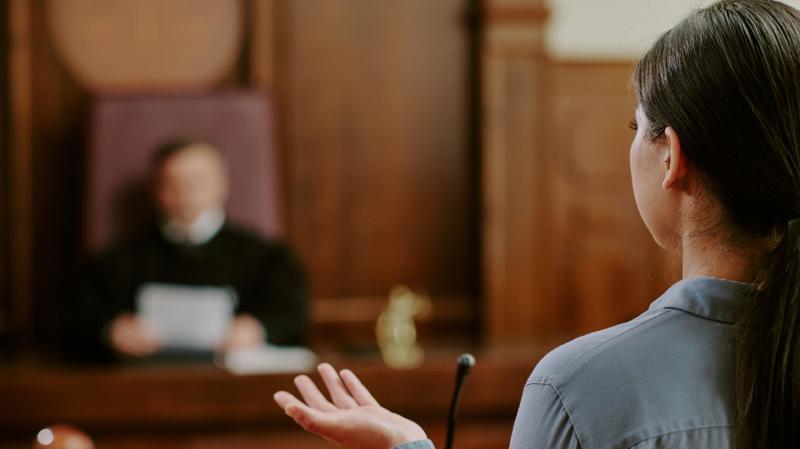
As the nation waits for an impending verdict in the murder trial of Massachusetts mother Lindsay Clancy, who admitted to killing her three young children, it was utterly inevitable that any attempt at an important conversation about mental health in America and the medical treatment of postpartum women would be hijacked by sensationalist online conspiracy theories. This is America in the year 2026, after all: If you’re not willfully disregarding the facts of a case so you can instead insert your own narrative to feed your specific biases, whatever they may be, then what are you even doing?
In the Clancy case, though, it’s fascinating how narrow the gulf is between the legitimate defenses (or at least empathy) that people have for the woman, and then the truly baseless, insulting conspiracy garbage that has proliferated among our treacherous Influencer Class and the online masses.
On one side of the gulf, you have those expressing frustration at the intense, deeply destabilizing struggle Clancy quite clearly endured in the four months leading up to the murders, bouncing between numerous medications (13 different psychiatric meds, 30 prescriptions) and seeking help from an array of providers as she slipped into suicidality and psychosis. These supporters, who have assembled at times outside of the Massachusetts courthouse carrying signs with slogans like “She Needed Help” or “Peace for Lindsay,” argue in favor of her not-guilty plea because they perceive her as not criminally responsible due to the depth of poorly treated mental illness she was experiencing at the time, conditions a forensic psychiatrist would diagnose after the killings as severe bipolar disorder and postpartum psychosis.
On the other side of the gulf, though, one will also find support for Clancy … but it’s support that is rooted in asinine indulgence of conspiracy garbage that is boosted by influencers peddling either sincere foolishness or a deeply cynical appeal full of intentional falsehoods to the online algorithms of social media services, which have always profited from a good conspiracy yarn. In this world, it’s not enough for Lindsay Clancy to be a victim by way of a mental healthcare system that allows people to fall through its cracks and disregards the repeatedly voiced concerns of a new mother. In conspiracy world, someone like Clancy can’t be a pitiable case as someone who committed an utterly monstrous act; she needs to be a truly innocent person because someone else is secretly responsible for the entire crime. And it should probably be no surprise that the TikTok sleuths, with their fantastic true crime accusation batting average, decided that person should be Clancy’s ex-husband, Patrick Clancy. Bonus: They’ve even thrown phrases like “forensic astrology” around.
The Lindsay Clancy case has been overrun by conspiracy theorists and psychics who insist that her ex-husband Patrick did it, despite Lindsay taking responsibility for the murders of her three children and pleading insanity.
— Lindsay Beyerstein (@beyerstein.bsky.social) 9:48 PM · Aug 24, 2026
“I do not believe that Lindsay Clancy committed these crimes. I fully believe that Patrick convinced her that she did,” said one TikTok user, summing up this brand of sentiment and baseless theorizing. Poke around in this neck of the woods, and you’ll soon get a sense of how thoroughly these types of accounts are seeking to rearrange reality, to suit how they think the case should go. They spin yarns, for instance, where a Svengali-like husband manipulates and takes advantage of the deepening psychosis and disconnect from reality being experienced by his wife in order to plan the perfect murder, where he kills his kids and then pins the entire thing on her. As is so common in conspiracy world, they pull heavily from fiction, sprinkling in tropes from legal and psychological thrillers; a coterie of Gillian Flynns co-crafting a living, alternate reality that is more exciting and dramatic than the profoundly sad reality we’re unlucky enough to live in. Anything that happens in the trial can be repurposed to actually support my point, when you think about it. As another TikTok user put it, in reference to a shattered Patrick Clancy’s testimony of finding his wife and dead children: “I didn’t doubt anything that happened until this man opened his mouth.” She naturally cites such relevant, objective reasoning as “he has dead eyes” for why it’s reasonable to feel this way.
Back in reality, meanwhile, Lindsay Clancy has sadly admitted from the beginning that she killed her three children, agreeing in advance to a stipulation of facts that puts this all in writing. The only debate in this trial, therefore, is over her criminal culpability for doing so. As legal observers and law enforcement officials following the case have noted, in response to the groundswell of online conspiracy theories, if there was any chance that Patrick Clancy was somehow involved, then Lindsay Clancy’s legal team/defense would never have chosen to forgo challenging the bedrock fact that she strangled three young kids.
“If there was the slightest chance that they could instill some reasonable doubt by introducing an alternate theory of the crime and shifting the blame onto him instead of her, they certainly would have done so,” said Ken Corey, a former NYPD chief and current fellow at the Chicago Police Lab. “You can cherry-pick certain facts that will point to Patrick Clancy, or you can manipulate certain facts that will make him appear to be guilty and share those online. But you’re doing that by ignoring the facts that exculpate him.”
Algorithms are responsible for fever pitch content surrounding trial, including misinformation, experts say
— Guardian US (@us.theguardian.com) 11:19 AM · Aug 24, 2026
What it boils down to is of course the eternal struggle between objectivity, the ability to shape an opinion or outlook based on verifiable information, and people simply choosing to believe what they want to believe, or what inherently strikes them as truth. And because the thought of a mother killing her children is so inherently abhorrent, so seemingly against the natural human order, people curious about the case are highly incentivized to find a way to mentally rationalize alternative ways this all could have happened. In our low-trust society, meanwhile, the general belief that an uncaring society or legal system is “out to screw us over” can also contribute to the desire in a conspiracy theory contingent to find a way to absolve a figure like Lindsay Clancy.
“So, if they’re following the trial and have learned a lot of detail about the trial, but don’t trust the legal system, and don’t trust police, and don’t trust the news media, they may be more likely to adopt conspiracy theories as a way to explain why the outcome they think should happen isn’t happening,” said Michael Wagner, director of the School of Journalism at the University of Wisconsin-Madison, who has extensively researched the relationship between individuals’ beliefs and desires in online environments. “When people see those things churn up in their feed again and again and again, because the algorithm prizes that kind of content, they also become more likely to engage in conspiratorial thinking.”
The entire social media space in the midst of one of these highly publicized trials, meanwhile, Wagner refers to as a “toxic soup for the development of conspiratorial thinking.”
Every time we have one of these cases that dominates the pop-cultural landscape, in fact, similar conspiracy theories emerge to cloud the narratives, sometimes ensnaring random, innocent people at the same time. In the wake of the 2022 University of Idaho college murders that captivated the country, for instance, a history department chair at the university, Rebecca Scofield, found herself accused of being involved in the crime by hordes of online conspiracy idiots, turned into an overnight scapegoat by people who pathologically needed to feel like they had all the answers. Why did suspicion land on Scofield? Well, it could literally all be traced back to a single social media user, “TikTok psychic” Ashley Guillard, who falsely claimed that her psychic revelations had told her Scofield had been engaging in an affair with one of the victims and had then planned the killings. Videos made by Guillard leveling these accusations were viewed millions upon millions of times across TikTok and other social media platforms, eventually leading to a defamation case from Scofield in which a civil court jury ordered Guillard to pay $10 million in damages. It was a classic case of baseless speculation and social media engagement-chasing that upended not only one but multiple lives, for absolutely no reason. One wonders if those pushing Patrick Clancy conspiracy theories could eventually end up in a similar position.
I want to represent a victim of these lying true crime TikTokers. They are so diabolical that I actually need to file a lawsuit about it. I have to put some heads on pikes.
— Morgan L. Stringer (@mostring.bsky.social) 6:32 PM · Aug 23, 2026
Soon, the jury in the Lindsay Clancy case will deliver its verdict. Regardless of what they find, it won’t change either the tragic facts of the case, or the deeply depressing story about a failed mental healthcare system that undergirds it. Nor will it likely change the deranged way that online America insists on reacting to cases like this one: by substituting depressing reality for one more at home in an airport paperback.
 Keep scrolling for more great stories.