

A ‘Killer Album’ Release Day Might Also Include a Spike in Car Accident Deaths
A new study suggests that the most dangerous day to be on the road might be when that new Taylor Swift or Rihanna album drops.
Photo via Unsplash, Rahul Himkar Splinter Traffic
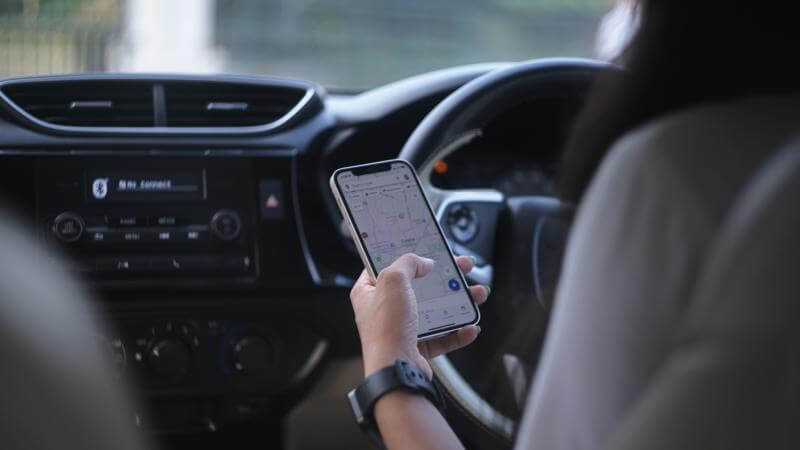
Could it be that the most dangerous day to get behind the wheel of your car–barring tornados, hurricanes or arsonist-aided wildfires–is actually the day that someone like Taylor Swift or Rihanna drops a long-awaited album? That’s the suggestion of a new study from researchers at Harvard Medical School, who found a statistically significant spike in traffic/auto fatalities that specifically seem to revolve around the dates of major album releases. The findings are relevant to a broader discussion on distracted driving and the impacts of phone usage on public safety, broadening the conversation around distracted driving from merely focusing on phone calls or texting to a wider array of potential distractions … up to and including the arrival of a Bad Bunny album.
Dr. Vishal Patel, a physician at Mass General Brigham and researcher at Harvard Medical School, said he was inspired to look into this specific correlation after finding that searching for a new album release on Spotify while driving had led him to become distracted behind the wheel. He wondered if the day of a really major album dropping–probably one of our last shared cultural experiences that approaches the “monoculture”–might result in many moments like this across the country, which could correlate with more danger and fatalities. Of the more than 35,000 people who are annually killed in car crashes in the U.S. according to the Department of Transportation, more than 3,300 of the fatalities were attributed to distracted driving in 2022, although this can be a difficult metric to measure.
To triangulate the data of this specific scenario, Patel’s study cross-referenced data from the Fatality Analysis Reporting System of the National Highway Traffic Safety Administration, and daily music streaming data from Spotify. Specifically, it identified the top single day streamed album releases between 2017-2022, which included the likes of Taylor Swift’s Midnights, Drake’s Certified Lover Boy and Bad Bunny’s Un Verano Sin Ti, then compared auto fatalities on those days to 10-day windows that came before and after the album release, while somehow controlling for the possibility of this just being a phenomenon related to certain days of the week. They also gathered data on other data points involved in those crashes such as drivers’ ages, the number of people in a vehicle, or whether alcohol was also a factor in the crash.
Mobile phone use at the wheel is endemic, deadly, and needs to be stamped out
www.theguardian.com/world/2026/a…
— Blackford Safe Routes (@blackfordsaferoutes.co.uk) 12:00 PM · Aug 17, 2026
“I already knew the FARS database well; it’s the federal registry of every fatal crash on U.S. roads, and there’s a long tradition of using it to ask whether crashes spike on Super Bowl Sunday or Tax Day,” said Patel to CNN. “It struck me that nobody had looked at album releases, which are one of the few moments when tens of millions of people reach for their phones at the same time, for the same reason, for something other than texting.”
What they found certainly seems to suggest at least a modest correlation: The study, published this week at the journal JAMA Network Open, found a roughly 15% increase in auto fatalities, specifically on the days that those major albums dropped. That’s not a mind-blowing increase, but it is a statistically significant one for the way it is elevated from the average number of fatalities recorded in the 10 days before or after a major album release. It suggests that there actually is a statistically significant, heightened danger to being on the road on those days, particularly if you are the person who is thumbing through Spotify, Apple Music, YouTube Music, etc.
Of particular interest, though, were the underlying details and demographic notes that back up the idea that music directly played a role in these crashes. The study found, for instance, that “excess fatalities occurring on album release days were higher among drivers who were younger and male and among crashes where a single occupant was involved, the weather was clear, alcohol was not involved, and vehicles were manufactured with infotainment systems.” Which is to say, the additional deaths were most likely to happen in scenarios where an individual person was operating their phone or infotainment system on their own, resulting in distracted driving.
“What convinced me it was real was the pattern underneath it,” Patel added. “The increase showed up mostly among drivers who were alone in the car, it was more pronounced among sober drivers than among drivers who had been drinking, and it wasn’t concentrated at night. If this were really about release parties and alcohol, you’d expect the opposite on all three counts.”
There are countless additional factors that could play a role here, everything from people playing music more loudly the first time they listen to a new album, making them less aware of road hazards, to the simple likelihood of them fiddling with sound settings on an infotainment system while they drive. All play into what ultimately can become a piece of deadly calculus. And the only potential fix is of course the one that none of our phone-fixated souls will want to seriously consider: Turning off our devices for a minute, or putting them out of reach while we drive. Do we dare sever our link to the hive mind, in the name of being less likely to be killed by an oncoming 4,000-lb chunk of metal? Or is that just a risk we’re willing to take when that next Rihanna album finally arrives?
 Keep scrolling for more great stories.