

These Greek Mythology Retellings Put Women Center Stage
If you wanted more of a focus on female characters in Christopher Nolan's The Odyssey, these are the Greek mythology retellings for you.
BooksEntertainment greek
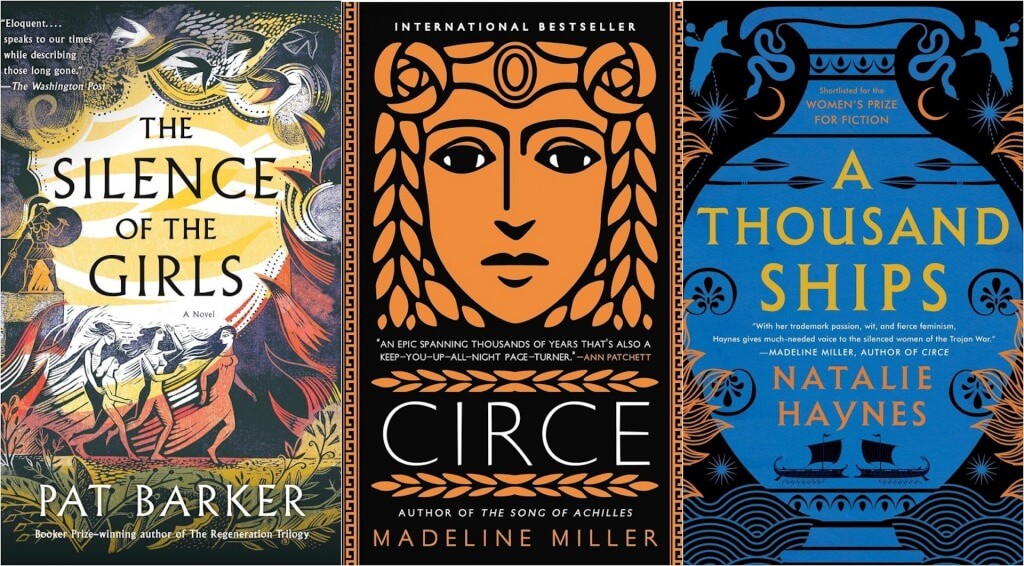
Christopher Nolan’s blockbuster film The Odyssey has made the world of Greek mythology a force in pop culture all over again—thanks to its epic scope, star-studded cast, and timeless themes of war, loss, guilt, and homecoming (with some giants and a cyclops thrown in for good measure). But Greek mythology’s tales of gods, goddesses, and humans full of various shades of hubris have never really gone out of style.
Retellings and reimaginings of these stories have been a driving force in the publishing industry for the better part of a decade, largely fueled by their focus on an aspect the originals aren’t necessarily all that interested in: their women. In tales from Homer to Aeschylus, women are, at best, relegated to the sidelines of men’s stories, treated as little more than objects to be fought over or trophies to be won. At worst, they’re frequently subjected to horrific sexual violence, portrayed as deceitful or otherwise monstrous, or outright killed.
Adding an explicitly feminist focus to these classic stories has given some of the most famous women of Greek mythology greater depth and agency, reinventing their tales for modern readers and, in many cases, deepening our understanding of the original myths. (Plus, unsurprisingly, they’re also just darn good stories.) Here are our recommendations for some Greek mythology retellings that put the many women of these classic tales front and center.

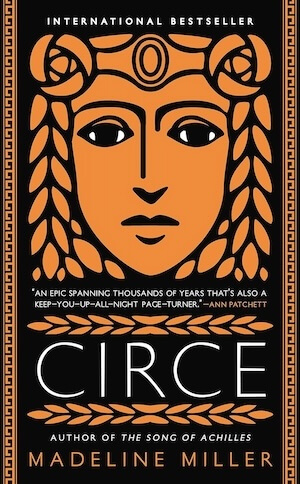
Circe by Madeline Miller
While Nolan’s The Odyssey includes literal monsters and giants, the film’s most memorable scene is an all-too-human one. Samantha Morton’s Circe is presented less as a sorceress and more of a survivor, a woman who has experienced the brutality of men firsthand, and who, as such, is more than capable of understanding the worst things they keep hidden within themselves. And if this character—who somehow is only onscreen for maybe ten minutes total—spoke to you. Well, Madeline Miller’s Circe is for you.
A runaway success when it was released in 2018, Miller’s novel helped spur a renewed interest in Greek mythology retellings throughout the publishing industry, particularly those that decided to put the often ignored women of these legends front and center. Circe broadens the story of the titular witch well beyond the world of The Odyssey—where she is technically only referenced in a handful of lines—adding nuance and differences to both her time with Odysseus and the other Greek myths in which she appears, including the story of Jason and Medea’s search for the Golden Fleece, and her family connection to Pasiphaë, the mother of the Minotaur. Beautifully written prose surrounds a complex protagonist who comes to her dark edges honestly. It’s gorgeous.
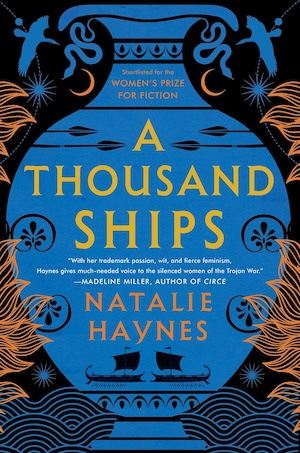
A Thousand Ships by Natalie Haynes
Natalie Haynes is the author of over half a dozen Greek mythology retellings including The Children of Jocasta, Pandora’s Jar, and her most recent novel, the Medusa-focused tale Stone Blind. But her best work is the sprawling saga A Thousand Ships, which reimagines the Trojan War from the perspectives of the female characters who tend to only show up in the margins of the works of famous male authors like Homer, Euripides, and Virgil.
Told via multiple perspectives featuring over 50 different female characters whose stories often intersect with and reflect one another’s, Haynes gives a voice to familiar figures like Helen of Troy, Clytemnestra, and Penelope alongside lesser-known women such as Hector’s widow Andromache, the muse Calliope, Aeneas’s wife Creusa, the Amazon princess Penthesilea, the tragically murdered Iphigenia, and many more.
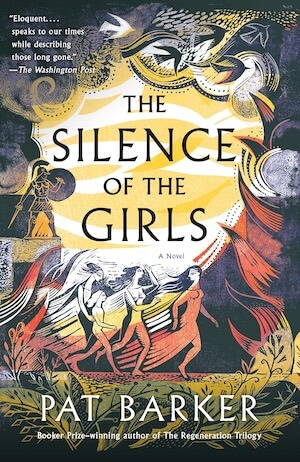
The Silence of the Girls by Pat Barker
Though Nolan’s Odyssey takes us into the night that Troy fell and shows us many of the atrocities committed by the Greek soldiers, including the beheading of the young woman whose face the goddess Athena assumes, it ignores the specifically gendered violence the Trojan women were forced to endure: Rape, captivity, enslavement, and just generally being bartered over like objects by their conquerors. But author Pat Barker doesn’t.
Her The Silence of the Girls is a female-forward retelling of The Iliad is primarily focused on Briseis, the former princess turned imprisoned slave who generally exists within the world of the original as a trophy for Agamemnon and Achilles to fight over. Not so in Barker’s version, which gives Briseis her voice back to allow her to bear witness to the violence men do—to women, to each other, and to the world.
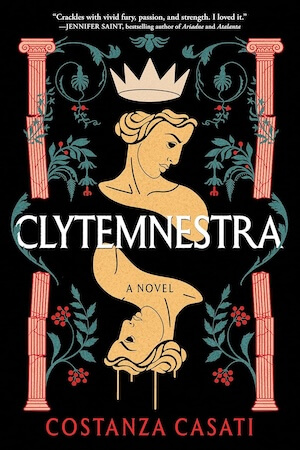
Clytemnestra by Costanza Cosati
Clytemnestra is one of the most frequently revisited (and often reviled) figures in all of Greek mythology, a character who appears in ancient works ranging from Homer to Aeschylus to Sophocles. In The Odyssey, she is held up against the ever-faithful Penelope as the example of the worst kind of wife, an unfaithful harpy who cheats on and then kills her husband as soon as he returns from the war. But as with so many famous female historical figures—if so many men insist she’s a monster, there’s almost certainly something worth exploring there.
Costanza Costai spends surprisingly little time on the most well-known aspects of Clytemnestra’s story: The sacrifice of her daughter to bring about a favorable wind, her violent revenge against the husband who allowed it, and her time ruling Mycenae while Agamemnon is away at war. Instead, Clytemnestra focuses on its titular character’s origins, casting her terrible end as part of a larger pattern of suffering, survival, and a refusal to bend for a world that wishes she were smaller.
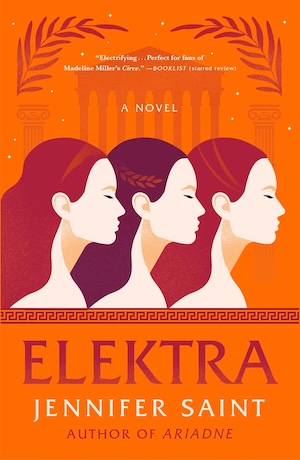
Elektra by Jennifer Saint
Author Jennifer Saint is one of the most prolific authors of Greek mythology retellings writing at the moment. From The Immortal Heart, which focuses on Aphrodite and Mars’s romance, to Ariadne, which tells the story of the Cretan princess cruelly betrayed by Theseus after she helps him defeat the Minotaur, her work is across the board excellent.
But it is Elektra that is required reading after Nolan’s Odyssey, a novel that intertwines the story of Agamemnon’s wife, his daughter, and the tragic seer he brought home as a captive. Told across three different but interconnected perspectives, the book is a story of female rage in many forms. It follows Clytemnestra as she plots revenge against her dirtbag husband for his murder of her daughter, Iphigenia; Cassandra, who is brought back to Sparta as Agamemnon’s slave after her prophecies go unheeded; and the titular Elektra, who comes of age during the decade of Troy’s defeat and who never forgives her mother for her adultery and the death of her father. And while the stories of these three women may feel very different, Saint finds common thematic ground between them all, as each struggles to forge her own path through a world that discounts female voices and agency.
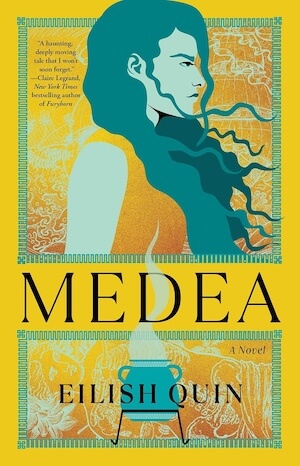
Medea by Eilish Quin
Greek mythology is full of villainous women. From murderous queens to vengeful goddesses, the many stripes of monstrous female characters are depicted much more often than good ones. (And an awful lot of those supposedly good ones end up either dead, raped, or otherwise enslaved, so your mileage may vary on how great their lives may or may not have actually been.) But if one bad woman stands atop the rest, it has to be Medea. A powerful sorceress who marries the Greek hero Jason after helping him retrieve the Golden Fleece, she murders her own children when he abandons her for a new royal bride.
Author Eilish Quin smartly refuses to attempt to justify the worst of Medea’s choices, or soft-pedal the genuinely horrific consequences of her actions. Instead, she chooses to offer context for her behavior that adds depth rather than excuses. The story of an abused, abandoned daughter who secretly teaches herself witchcraft as a means of survival in a world that gives her few choices, it’s easy to feel for this Medea, even as we watch the roots of who she’ll one day become take hold.
A fairly popular subject among authors in recent years, there are several other great Medea-focused retellings on shelves, including The Witch of Colchis by Rosie Hewlett and Bright Air Black by David Vann.
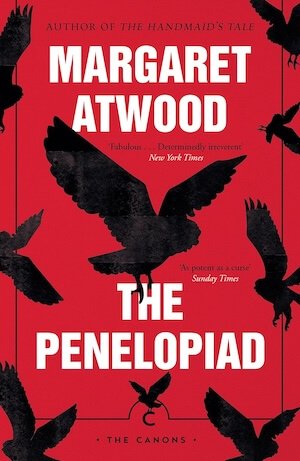
The Penelopiad by Margaret Atwood
As a general rule, one should always read anything Margaret Atwood writes, and the prospect of the author of The Handmaid’s Tale digging into the story of Greek mythology’s most frequently idolized wife is immediately appealing for all the obvious reasons you can think of.
A sharply feminist retelling and critique, Atwood’s 2005 novella The Penelopiad puts Odysseus’s wife, Penelope, center stage, recounting the events of her life from the underworld after her death. Not only does Atwood give Penelope’s sly intelligence and survivor’s heart their due, the book also wrestles with one of the original poem’s most uncomfortable (and let’s be real, unnecessary) side plots, the murder of the twelve maids whom Odysseus has deemed disloyal for sleeping with the suitors who’ve been camped out in Ithaca’s castle for years. In Homer’s poem, they’re hanged after being forced to clean up after their newly returned master’s string of murders. In Atwood’s retelling, they become something of a Greek chorus offering some biting commentary on both the events of the original story and the deep gender and class disparities that are so prevalent in ancient mythology.
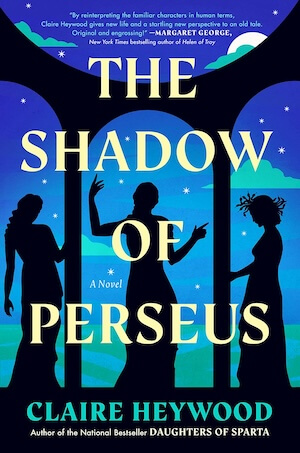
The Shadow of Perseus by Claire Heywood
The Greek hero Perseus is remembered for many supposedly great deeds, including slaying the Gorgon Medusa, rescuing the princess Andromeda from a sea monster, and founding the kingdom of Mycenae (which will one day be ruled by Agamemnon). Claire Heywood’s The Shadow of Perseus reframes the legend around three of the primary women in his life, to ask whether the tales of famous heroes are really all that heroic after all. Told across three perspectives, the story follows Danae, mother of Perseus, Medusa, the monster he’s most famous for killing, and his wife Andromeda, a literal damsel in distress turned loyal spouse.
The book’s depiction of Perseus as a man who is capable of a monstrousness to rival any of the famed creatures he supposedly faced is occasionally dark and shocking, and the story’s central premise—that these capable women are stuck forever in the shadow of a man’s story—can feel bleak at times. But its framework (which I won’t spoil here) is such that everything about this retelling feels incredibly original.
Heywood has several other excellent books that would have made this list if we weren’t trying to restrict it to a single title per author. Her latest, The Wandering Queen, reimagines the story of Dido, Queen of Carthage, who tragically kills herself after being left behind by the wandering hero Aeneas.
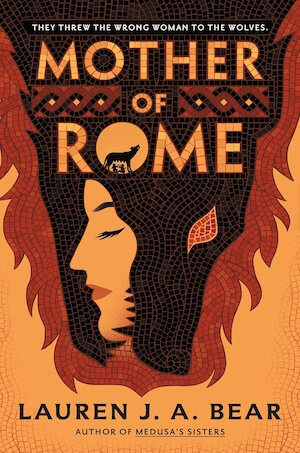
Mother of Rome by Lauren J.A. Bear
Technically, Lauren J.A. Bear’s Mother of Rome is both a retelling of Greek mythology and a literal Roman origin story. Still, since Aeneas was a prince of Troy before heading to Italy after Troy’s fall, we’re going to let this little cheat stand. Aeneas’s most famous descendants are Romulus and Remus, the twins who were raised by a she-wolf and whose story is the basis for the founding of the Eternal City. The image of a wolf suckling two young boys has become famous the world over, and has been a symbol of Rome for thousands of years. But who was their human mother?
That’s the question that Mother of Rome seeks to answer, crafting a sympathetic and empowering portrait of Rhea Silva, a princess of Alba Longa who becomes a Vestal Virgin after a series of family tragedies leaves her father unfit to rule and the throne in the hands of her vicious and vindictive uncle. But Rhea refuses to go gently into that good night, and what follows is one part steamy love story and one part gutsy story of survival.
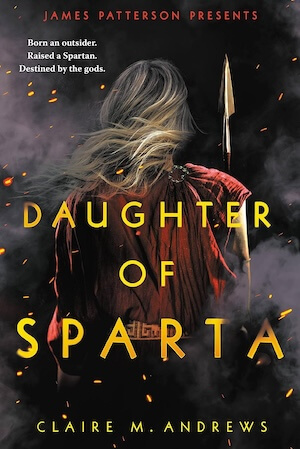
Daughter of Sparta by Claire Andrews
A rare young adult Greek mythology retelling, Claire Andrews’ Daughter of Sparta trilogy mixes multiple familiar legends into its spin on the story of the romance of Daphne and Apollo. Longing to be accepted as a true Spartan warrior, Daphne is sent on a quest to find nine missing Muses and restore power to Olympus, with the handsome Apollo as her guide.
In some respects, you can absolutely guess what happens next: Daphne can’t help falling for the god, despite his reputation. But Andrews’s heroine is also refreshingly capable and courageous in ways she doesn’t get the chance to be in the original myth, allowing her to become something more than yet another woman done wrong by a god behaving badly. Their adventures across the trilogy intersect with many famous faces from legend, including Prometheus, Minos, and Helen of Troy, and ultimately take on a life of their own outside of their source material.
 Keep scrolling for more great stories.