

Charlize Theron Defined Atomic Blonde by the Stereotypes She Wanted to Avoid
With a showstopping oner and a killer heroine, the producer-star handcrafted a modern example of female action done right.
Photo: Focus Features Movies action movies
This is an excerpt from the A.V. Club. To read the full article, click here.
Because women heroes are outliers in the genre, there’s a sense they need a reason to exist—whether that’s avenging their own rape or standing up to institutional sexism or proving their mettle as mothers or taking their father’s place in the Chinese army. Men get that kind of motivation sometimes too, of course. There’s a reason “fridging” is such a mocked trope. But it’s not required the way it often feels like it is for women. Sometimes you’re just Ethan Hunt or Dirty Harry or the bad boys from Bad Boys.
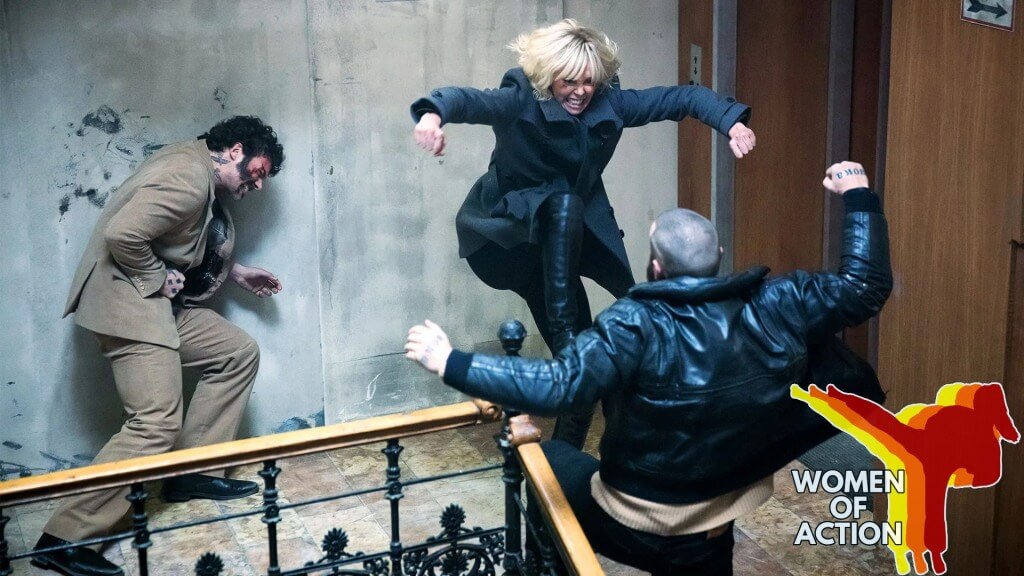
For her 2017 action vehicle Atomic Blonde, Theron wanted to upend those norms, and about half a dozen others too. MI6 field agent Lorraine Broughton shows up in 1989 Berlin because it’s her job, not because she’s got a personal vendetta. She beds someone because she wants to have sex, not because she’s falling in love. And when the fighting comes, she winds up just as bruised and bloody as any male action star. It’s not until you see Theron’s face all swollen in the third act that you realize how rare that kind of imagery is in a female-led action film. “A lot of times studios or producers are not comfortable with seeing a woman with bruises,” Theron told Variety. It’s common for female heroes to prove their badassery without a scratch on them. Atomic Blonde makes you feel every punch.
With Women Of Action, Caroline Siede digs into the history of women-driven action movies to explore what these stories say about gender and how depictions of female action heroes have evolved over time.
 Keep scrolling for more great stories.