

They're Content Creators With Thousands of Adoring Fans. So Why Do They Feel So Terrible?
Research finds that many popular content creators feel trapped and distressed by their own audiences, a pattern researchers call audience entanglement.
In Depth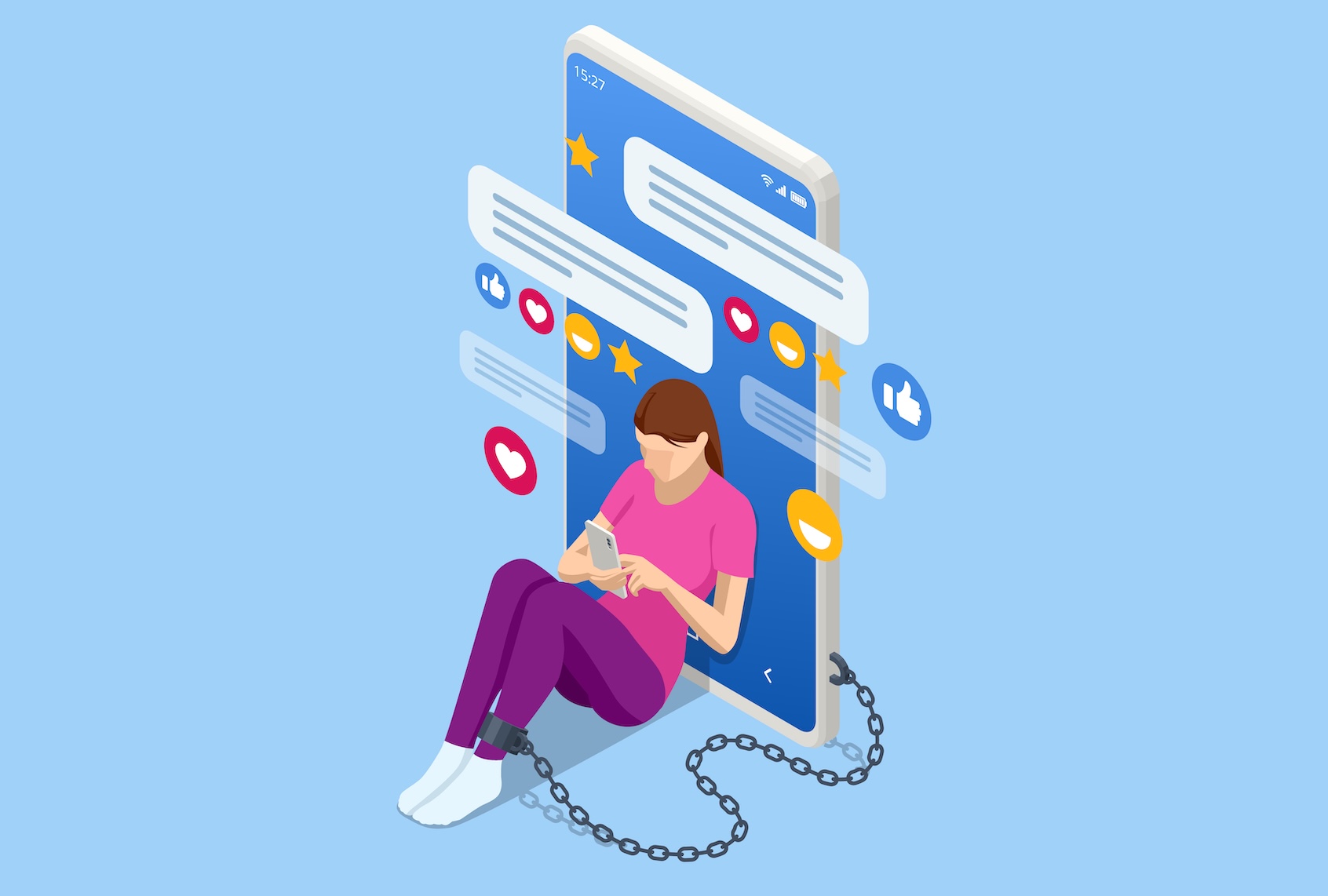
Julianna Pillemer, who teaches organizational psychology at NYU, spent several years interviewing content creators about their working lives — 54 of them, visual artists and musicians with substantial followings. These are people whose careers look, from outside, like the best available outcome of the last fifteen years of the internet. A striking number of them were miserable.
Audience entanglement
The research gives the mechanism a name: audience entanglement. It describes what happens when the boundary between a creator and the people watching stops holding — when audience reactions are no longer feedback about the work but material out of which the creator's sense of self is assembled.
The practical symptoms are specific. Posting something the followers did not expect does not register as a slow week; it registers as a betrayal, and the betrayal runs in both directions at once. The creator feels they have let people down. The audience, which has been encouraged for years to think of the relationship as friendship, agrees loudly and in public.
This is not the same as ordinary performance anxiety, and it is not stage fright. A musician who plays badly has a bad night. A creator whose numbers dip has evidence about their own worth, delivered hourly, by a system designed to keep them refreshing.
The scale of the thing
The numbers are the part worth sitting with. The creator economy is currently valued at roughly $300 billion, with Goldman Sachs projecting something close to half a trillion within a few years. Content creation now outranks doctor and astronaut as a stated career ambition among Gen Z and Gen Alpha. Arizona State is preparing to offer it as a major.
So the pipeline is being formalized — degree programs, career counseling, the full apparatus — around an occupation whose central hazard is that the product is the person, and the performance review never closes. There is no other profession structured this way. A surgeon is not evaluated by patients in real time in a comment field. A novelist gets reviewed twice a year, not twice an hour.
What escape looks like
The researchers did find people who had climbed partway out, mostly through what they call entanglement management strategies. The tactics are unglamorous: hard limits on when comments get read, a deliberate gap between the account and the person running it, and — the difficult one — a willingness to disappoint the audience on purpose, occasionally, to prove to yourself that you can survive it.
None of that is a solution. It is a set of defensive habits, the equivalent of learning to lift with your knees in a job that requires lifting all day. The load does not change. You just get slightly better at not being destroyed by it.
What the study makes hard to avoid is the conclusion that this is an occupational health issue rather than a personal failing, arriving in an industry that has no occupational health infrastructure at all — no union, no standard contract, no employer with a duty of care. Half a trillion dollars, and the safety guidance is currently being invented by individual twenty-four-year-olds, alone, after it has already gone wrong.