
Sacha Baron Cohen Resurrects 'Ali G', Triggering a Fierce Battle Over Satire vs. Racist Relic
Sacha Baron Cohen's revived Ali G film has set off a boycott campaign and a debate over whether the character is satire or stereotype.
Celebrities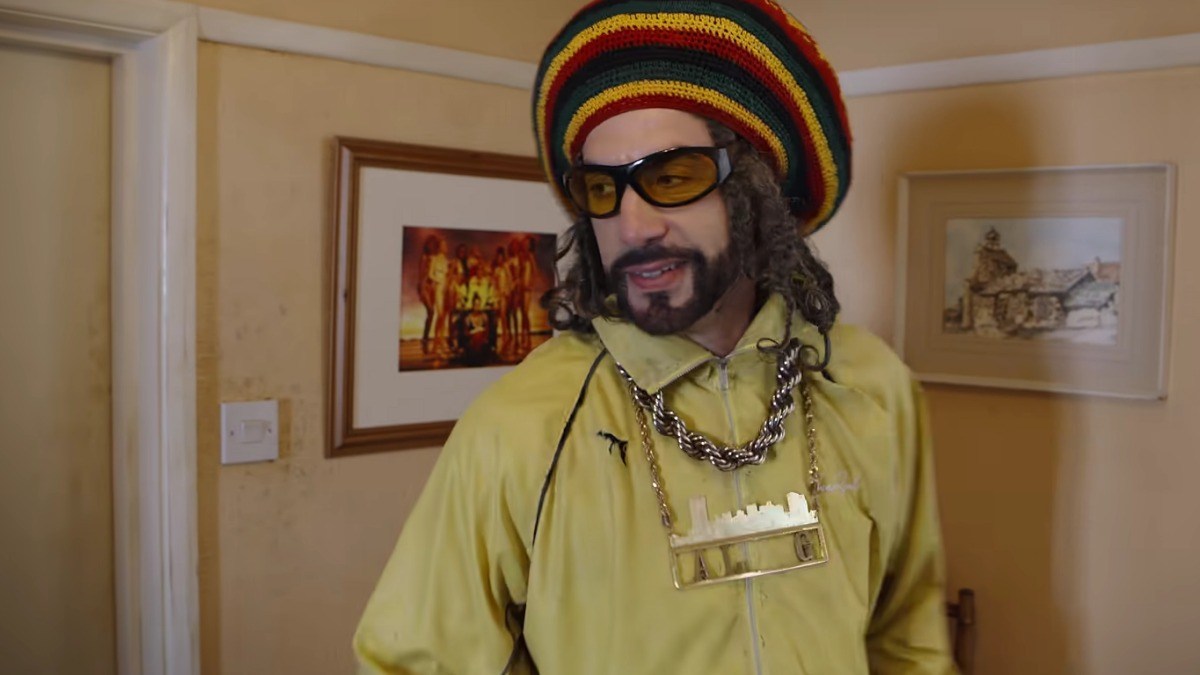
Sacha Baron Cohen is bringing Ali G back. "Ali G: Who Iz I?" opens Oct. 23 — a mockumentary that also marks Cohen's first time directing — and the fight over whether cinemas should show it at all began well before anybody outside the production had seen a frame.
A campaign aimed at the buildings
NewsCord, a British media watchdog that uses AI tooling to monitor coverage, has organized the opposition. Its supporters have sent more than 37,000 emails to cinema operators asking them not to book the film: Odeon, Cineworld, Vue, Everyman and Showcase in the U.K., plus exhibitors in the United States, Canada, Australia and the Middle East.
That is a substantial campaign to run against a comedy nobody has watched, and its structure is the genuinely novel part. Nobody is asking for cuts. Nobody is asking the studio to withdraw it or the certification board to intervene. The pressure is being applied to the venues — a distribution fight rather than a content fight, and a much harder one to argue about in public, because a cinema chain's booking decisions are nobody's business but its own.
The objection, which is not new
The complaint itself is straightforward and has been available for twenty-five years. Ali G is a white performer working a set of mannerisms borrowed from Black British youth culture, and a considerable share of the comedy has always depended on the audience finding the borrowing itself funny — the incongruity of this man, doing this voice.
The standard defense in 2000 was that the target was never the character but the interviewee: the politician or the professor who could not tell they were being had, and whose condescension was the actual punchline. That defense was reasonably strong at the time. It has aged unevenly, in part because the interviewees stopped being fooled and the character had to stand on its own.
An unusual coalition on the other side
The counter-campaign has assembled a strange group. Kevin Durant and A$AP Rocky have publicly backed the film's release. The Danish chain NFBIO has said it will screen it. The arguments being offered are broadly identical and broadly about artistic freedom, which is what tends to happen when the specific work in question is less interesting to the defenders than the principle attached to it.

Cohen has not conceded much, which is consistent with a thirty-year career built on refusing to explain a joke. That refusal is a genuine artistic position and also, at this point, a commercial one — the argument is free publicity for a film that would otherwise be a nostalgia release in a crowded October.
What actually gets decided
The outcome will be settled by exhibitors doing arithmetic rather than by anybody winning the argument. A chain will book it if the projected revenue exceeds the projected aggravation, and 37,000 emails is a real number in that calculation without being a decisive one.
Whatever happens, the method is the thing worth noting. Campaigns used to target broadcasters, advertisers, and certification boards, because those were the chokepoints. The chokepoint has moved to the booking desk, and the booking desk has never had to explain itself to anyone.